
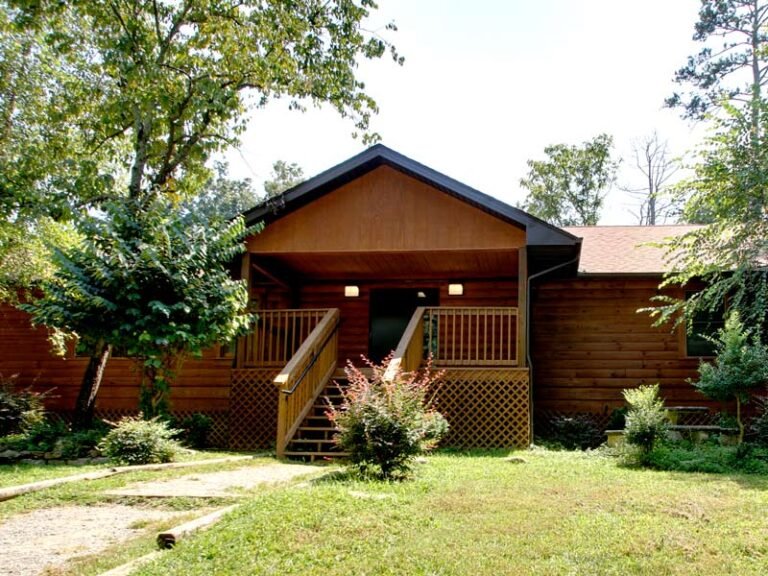
🌟 Key Highlights: The Village Academy
The Village Academy (TVA) is a private, co-educational independent school in Louisville, Tennessee. It is committed to providing a personalized, project-based education that emphasizes mastery learning, self-discovery, and entrepreneurial leadership in a supportive and student-driven environment.
🏫 Overview
-
Type: Private / Independent School (Often utilizing an Acton Academy/Montessori influence)
-
Location: Louisville, Tennessee (Blount County, near Knoxville/Maryville)
-
Grades Served: K – 12th Grade (Often structured as Lower School, Middle School, and High School)
-
Enrollment: Varies, typically a smaller student body
-
Core Mission: To equip students to find their calling and change the world by cultivating intellectual curiosity, self-management, critical thinking, and a mastery-driven work ethic in an intentionally student-led learning environment.
-
Affiliation: Independent private school; often inspired by the Acton Academy model.
-
Accreditation: Primarily accredited or approved through state and independent school associations.
-
Focus: Full K–12 education emphasizing student agency, project-based learning, and character development.
✅ What Makes the School Unique?
TVA is defined by its student-centered philosophy, mastery model, and focus on real-world application:
-
-
Student-Led/Acton Model: The school is largely student-run, fostering a culture where learners take ownership of their education through contracts, peer accountability, and self-governance. Teachers serve as “Guides” rather than lecturers.
-
Mastery-Based Progression: Students must achieve mastery (typically 90% or higher) of a subject unit before advancing to the next. The school avoids letter grades, focusing instead on competency and deep understanding.
-
Project-Based Learning (PBL): The curriculum revolves around real-world, hands-on projects and Socratic discussions, replacing traditional lectures. This fosters critical thinking, collaboration, and practical application of knowledge.
-
-
Entrepreneurial Focus: A core component of the program is the development of an entrepreneurial mindset. Students often participate in exhibitions and public presentations of their work and may participate in business fairs.
-
Mixed-Age Environment: Classrooms often utilize mixed-age groupings (e.g., ages 6-9, 9-12), which encourages peer mentorship, leadership development, and learning at the child’s natural pace.
-
Technology Integration: Utilizes adaptive learning software and technology to allow students to progress through core skills in Math and Language Arts at their individual level and pace.
-
Small Class Sizes: Maintains an intentionally small class size and low student-to-teacher ratio, facilitating personalized guidance and mentorship from the Guides.
📞 Contact Information
| Detail | Information |
| Address | 1205 US-411, Louisville, TN 37777 |
| Phone | (865) 604-5415 |
| Website | thevillageacademytn.org |
Recess Policies
- Which grades at your school receive daily recess or free break periods?
- How are recess and/or free break periods structured? Timing?
Technology / Device Use
- Are cell phones or other personal devices restricted during the school day? What is the policy?
- What are the consequences for violating technology policies?
- Are there any other technology policies? For example, are there technology controls inside and/or outside of school (e.g., web monitoring, filters, etc.)?
Behavior
- What are the school's behavior policies?
- Does the school have a behavior/discipline matrix that lists the behaviors and the appropriate consequences? Could you please include your school’s behavior/discipline matrix?
A school can have discipline/behavior policies, but these policies can be broad. It can be difficult to understand the actual consequences and what actually occurs at school. This section displays the concrete consequences that occur for various behaviors based on teacher feedback. If you are/were a teacher, please email me (Mark Yager) at myager890@gmail.com to give your input. You will remain anonymous when you provide your input.
Explanation of discipline at the school (Summarized based on teachers' input):
| Type of Behavior | Typical Consequence / School Response |
| Tardiness / Late to Class | |
| Dress Code Violation | |
| Failure to Follow Directions / Classroom Rules | |
| Disruption in Class (talking out, off-task behavior, etc.) | |
| Incomplete Homework or Repeated Lack of Effort | |
| Possession or Misuse of Cell Phone / Electronic Device | |
| Disrespect to Teacher / Staff | |
| Use of Inappropriate or Profane Language | |
| Dishonesty / Cheating / Academic Misconduct | |
| Minor Property Misuse or Damage | |
| Bullying / Teasing / Harassment (Verbal or Online) | |
| Defiance / Refusal to Comply with Staff Directives | |
| Leaving Class or Campus Without Permission | |
| Physical Aggression / Fighting | |
| Vandalism or Major Property Damage | |
| Possession of Tobacco or Vaping Device | |
| Possession or Use of Alcohol / Drugs | |
| Threatening Behavior or Intimidation | |
| Possession of a Weapon or Dangerous Object | |
| Other Behavior: | |
| Other Behavior: | |
| Other Behavior: | |
| Other Behavior: |
Sorry, no records were found. Please adjust your search criteria and try again.
Sorry, unable to load the Maps API.