
🌟 Key Highlights: Carroll Academy
🏫 Overview
-
Type: Special Purpose / Intensive Day Treatment Program / Court-Ordered Facility
-
Location: Huntingdon, Tennessee (Carroll County)
-
Grades Served: Typically 6th Grade – 12th Grade (Adolescent focus)
-
Enrollment: Serves approximately 200 students per year (average daily enrollment is smaller).
-
Core Mission: To provide compassionate, competent care and integrated professional services to at-risk adolescents referred by Juvenile Courts, consciously teaching and modeling functional life and academic skills necessary to assume meaningful lives.
-
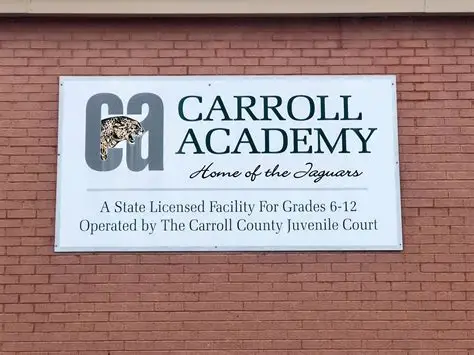
Affiliation: Operated by the Carroll County Juvenile Court and licensed by the State of Tennessee Department of Children’s Services (DCS) as a custody prevention agency.
-
Accreditation: Licensed by the state; provides a continuum of Special Education and regular educational services.
-
Focus: Behavioral modification, educational continuity, group life skills training, and family intervention for court-ordered youth.
✅ What Makes the Program Unique?
Carroll Academy is defined by its specialized function, commitment to intervention, and unique culture:
-
Court-Ordered Attendance: Students are mandated by a Juvenile Court order (from Carroll, Henry, Henderson, Weakley, and Benton counties) to attend the program for six months or until they complete their behavioral plan.
-
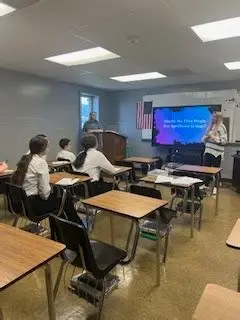
Integrated Treatment and Education: Provides a holistic program that integrates counseling, family intervention, group life skills training, and appropriate educational services (including special and regular education) in a single setting.
-
Behavior Modification Focus: The program is intensive and centered on behavior modification and intervention, utilizing a structured environment and a level system to teach self-respect through self-discipline.
-
TSSAA Sports for Life Lessons: The athletic program (especially basketball) is used as a therapeutic tool. Students are often court-ordered to play, and the focus is on teaching perseverance, teamwork, and overcoming adversity rather than winning. The girls’ team has received national attention (ESPN, The New York Times) for their unique story and loss-to-win philosophy.
-
Educational Continuity: Provides continuous educational services and a transition period after graduation to help reintegrate the student back into the regular educational community.
-
Small Class Sizes: Maintains an intentionally small class size to facilitate individualized instruction and intensive therapeutic attention.
-
Historic Facility Feature: The gymnasium houses the original basketball floor from the Memphis Pyramid (former home of the University of Memphis Tigers and Memphis Grizzlies).
📞 Contact Information
| Detail | Information |
| Address | 625 High Street, Huntingdon, TN 38344 |
| Phone | (731) 986-1350 |
| Website | carrollacademy.com |
Recess Policies
- Which grades at your school receive daily recess or free break periods?
- How are recess and/or free break periods structured? Timing?
Technology / Device Use
- Are cell phones or other personal devices restricted during the school day? What is the policy?
- What are the consequences for violating technology policies?
- Are there any other technology policies? For example, are there technology controls inside and/or outside of school (e.g., web monitoring, filters, etc.)?
Behavior
- What are the school's behavior policies?
- Does the school have a behavior/discipline matrix that lists the behaviors and the appropriate consequences? Could you please include your school’s behavior/discipline matrix?
A school can have discipline/behavior policies, but these policies can be broad. It can be difficult to understand the actual consequences and what actually occurs at school. This section displays the concrete consequences that occur for various behaviors based on teacher feedback. If you are/were a teacher, please email me (Mark Yager) at myager890@gmail.com to give your input. You will remain anonymous when you provide your input.
Explanation of discipline at the school (Summarized based on teachers' input):
| Type of Behavior | Typical Consequence / School Response |
| Tardiness / Late to Class | |
| Dress Code Violation | |
| Failure to Follow Directions / Classroom Rules | |
| Disruption in Class (talking out, off-task behavior, etc.) | |
| Incomplete Homework or Repeated Lack of Effort | |
| Possession or Misuse of Cell Phone / Electronic Device | |
| Disrespect to Teacher / Staff | |
| Use of Inappropriate or Profane Language | |
| Dishonesty / Cheating / Academic Misconduct | |
| Minor Property Misuse or Damage | |
| Bullying / Teasing / Harassment (Verbal or Online) | |
| Defiance / Refusal to Comply with Staff Directives | |
| Leaving Class or Campus Without Permission | |
| Physical Aggression / Fighting | |
| Vandalism or Major Property Damage | |
| Possession of Tobacco or Vaping Device | |
| Possession or Use of Alcohol / Drugs | |
| Threatening Behavior or Intimidation | |
| Possession of a Weapon or Dangerous Object | |
| Other Behavior: | |
| Other Behavior: | |
| Other Behavior: | |
| Other Behavior: |
Sorry, no records were found. Please adjust your search criteria and try again.
Sorry, unable to load the Maps API.